Ķengarags is one of the largest apartment block estates in Riga, and the meter situation there is highly predictable — which makes the work quick.
The housing in Ķengarags stretches along the Daugava, and its core is made up of Soviet-era series-built blocks. In water meter work that brings one practical advantage: the assemblies in every apartment look almost identical. Once we have worked in one building, we know what to expect in the next.
That does not remove the need for a survey, but it does make planning the time more precise. In a single apartment with two meters the work usually fits within half an hour, provided the shut-off valve is in working order.
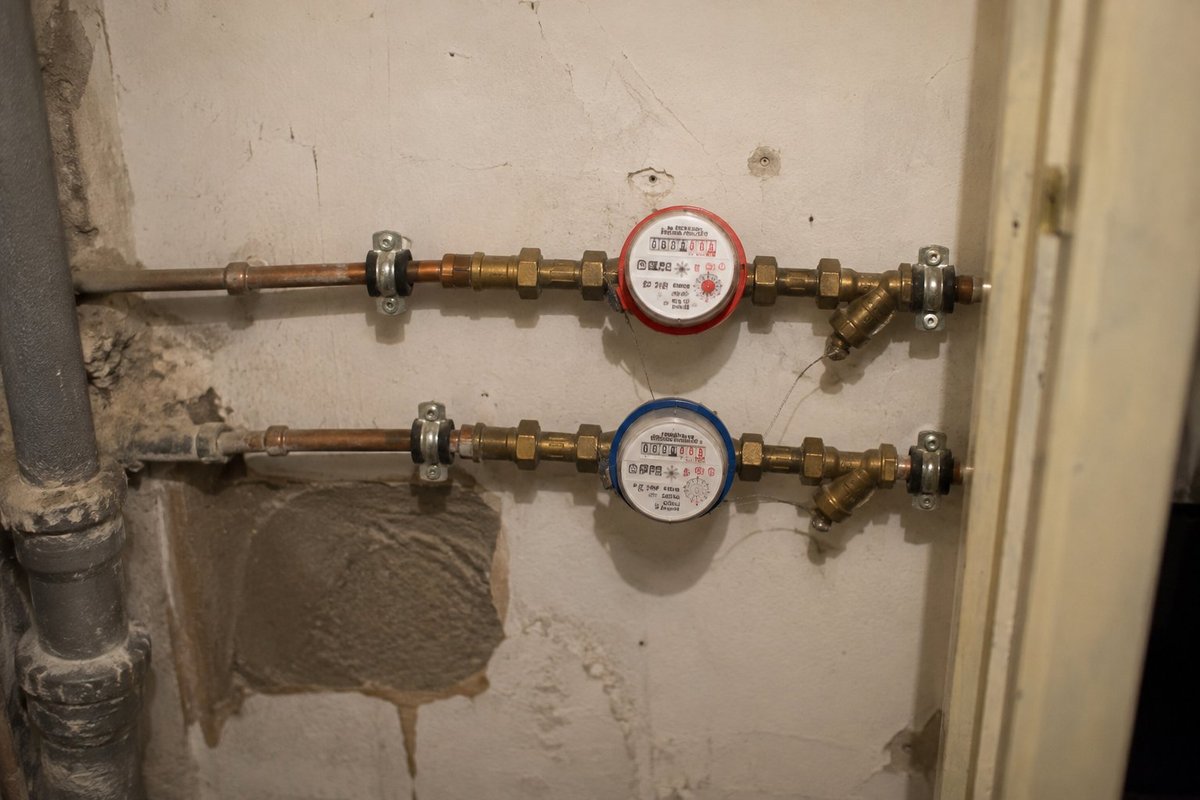
Series-built blocks. In most buildings the meters are in the bathroom or WC at the riser pipe, behind an inspection hatch. The layout repeats from apartment to apartment, so the work is predictable.
Meters installed at the same time. Because the buildings were completed at roughly the same period, the meters were often installed at the same time too. In practice that means they start needing attention at about the same time across a building.
Shut-off valves. The most common unexpected factor is not the meter but a valve that has not been turned since the building was handed over. If it does not close fully, the replacement also involves changing the valve.
Pre-war fragments and newer housing. Ķengarags also has individual older and newer properties where the situation differs. There a survey before the work is more useful than in a standard block.
In Ķengarags we offer the full range of services, and the meter is included in each of them — you do not have to buy anything separately.
Removing the old meter and fitting a new one — the most common job in this neighbourhood.
Apartment owners in the series-built blocks. The majority of requests — a planned replacement once the meter has reached the end of its service life.
Residents with a specific problem. A fogged dial, damp around the connections, or a meter that turns when no water is being used.
Property managers. Building-wide replacements, where the schedule and consistent documentation matter.
You fill in the form, giving the property type and the number of meters. If you are not sure, choose the consultation option — that is our practice.
We get in touch and agree a time. In Ķengarags buildings we often plan call-outs riser by riser.
We shut off the water supply to your apartment, replace the meters and check the connections.
We seal the meters and prepare the certificate with the readings.
In Ķengarags, where the buildings are long and have many stairwells, it makes sense to plan building-wide work riser by riser. For an individual apartment the most practical things you can do are to clear the access to the hatch and find out whether the shut-off valve works — those two things save the most time.
If the meter is leaking, fogged up or turning when no water is being used, there is no point in waiting. The last of these usually indicates not a fault in the meter but a leak in the system — most often in the toilet cistern.
In that situation, describe in your request exactly what you are seeing. It helps us understand whether the issue is only the meter or something else in the assembly.
Dry white deposits around the connections mean water has leaked there at some point. It is worth having that looked at before it becomes a bigger problem — that is our practice.
The most common question is whether both meters need replacing or whether one is enough. In series-built blocks they were almost always installed on the same day, so the wear is similar — replace only one and the other will most likely need attention soon afterwards.
The second question concerns the readings. We explain that before starting work. That is precisely why during the job we record both the closing reading of the old meter and the opening reading of the new one, and enter them in the certificate.
The third is about the water being turned off. During a replacement in a single apartment the water is turned off only for your apartment and only for the duration of the work — the neighbours are unaffected — that is our practice.
The advantage in Ķengarags is not just that the assemblies look the same. What matters in practice is that after a few jobs in one building series we already know what type of connections are there, how much room there is around the meter and which shut-off valves were originally fitted.
That means we arrive with the right parts rather than discovering on site that something is missing. For the client that shows up as a shorter working time and less risk of the job having to be postponed.
That is exactly why combining work across several apartments into one call-out is noticeably more cost-effective in the large estates. If your neighbours have the same need, it is worth mentioning in your request.
In Ķengarags buildings, property managers periodically organise a meter replacement across the whole building. If one has been announced for your building, it is often sensible to wait for it — building-wide work usually costs less than an individual call-out.
There are two cases where waiting is not worthwhile. The first is if the meter is already causing a problem: leaking, fogged up, or giving readings that look implausible. The second is if the joint project has not yet been finalised and there is no known date.
If you are not sure how things stand in your building, it is worth asking your property manager before ordering the work separately. We lose nothing by that, and you may save.
| Status | Riga neighbourhood |
| City | Riga |
| Location | Right bank of the Daugava / eastern or northern Riga |
We will get in touch within 5 minutes of you submitting the form
Your request has been received. We will contact you as soon as possible.