An installed meter does not yet mean the metering is sorted. We seal the meter, prepare the replacement certificate and complete the documents needed for submission.
Many customers are surprised to learn that the process is not over once the meter has been replaced. A physically installed meter starts counting straight away, but before its readings can be used for billing, two more steps are usually needed: a seal, and a document confirming what took place.
This is where the process most often stalls. The technician has come, replaced the meter and left — and then it turns out the property manager wants a certificate with the readings, which does not exist. Or the meter has not been sealed, and so it is not accepted for billing.
We regard these steps as part of the job, not as an extra service to be mentioned separately. That is exactly why our offer is "everything in one place" — so that you do not have to wonder what has been left undone.
We fit a seal at the meter's connection point once the installation is complete.
We prepare a certificate with the details of the old and new meters, the readings and the date of the work.
We record the old meter's final readings and the new one's starting readings — this prevents disputes over consumption.
We complete the documents so that they are ready to hand over to your property manager.
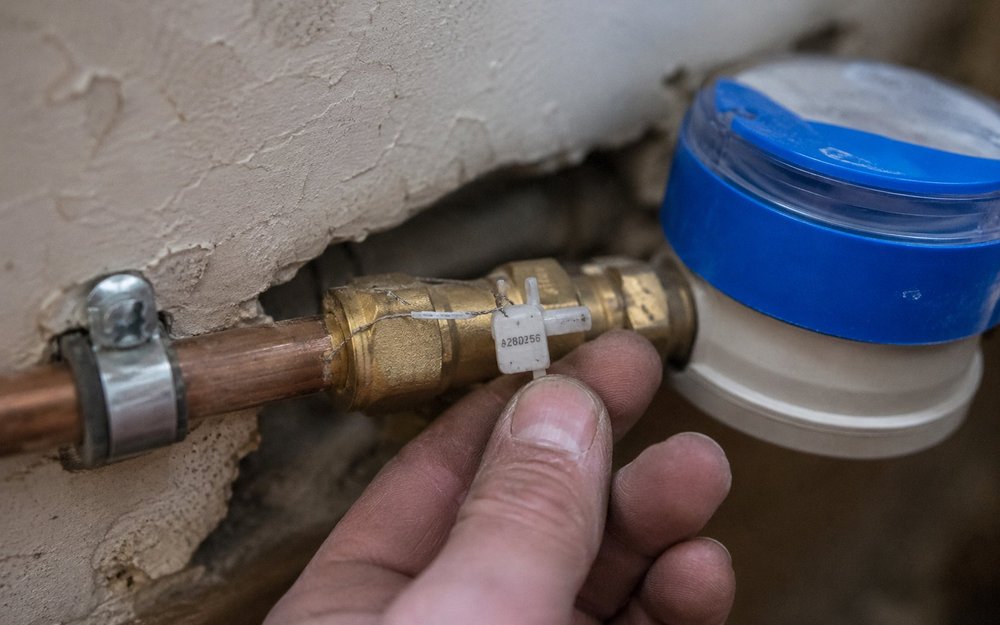
A seal is a small control element fitted in such a way that the meter cannot be removed or disconnected without damaging the seal. Its purpose is simple: to confirm that since installation nobody has had access to the meter who could have influenced its readings.
In practice this means the seal needs looking after. If you are renovating the bathroom or changing pipework, warn the tradespeople about the meter seal. If the seal does get damaged, it is worth dealing with straight away rather than waiting until questions arise about the metering.
The exact set of documents differs depending on the building's property manager and on whether it is an apartment, a private house or a commercial property. Most often the following are needed:
If you know your property manager's specific requirements, tell us about them in your request — we will prepare the documents accordingly. If you do not know them, that is not a problem: we will prepare a standard set, which is sufficient in most cases.
As agreed, sealing and handling the paperwork are part of our replacement and installation service. We agree the exact scope before we start work.
The moment the old meter comes off and the new one goes on is the only moment when both meters' readings can be recorded together. If that is not done, it is no longer possible to say precisely where one meter's record ended and the other's began.
In practice this is the source of most billing disputes after a replacement. The property manager has the last declared reading of the old meter, you have the reading of the new one, and the difference cannot be explained if nobody wrote down what the old meter finished on.
So we always record the readings, even when the customer has not thought about it. It is one minute of work that can head off months of uncertainty.
An installed meter starts counting immediately, but that does not yet mean your bill will be calculated from it. For that to happen, the property manager or service provider has to be told that the meter has been replaced and to receive confirmation that it was installed correctly and sealed.
Until then an odd situation can arise: you are already using the new meter, but the bill is being calculated from the old figures or at a flat rate. Submitting the documents is therefore not a bureaucratic add-on but the step that actually completes the job.
How quickly that happens and in what form is set by the individual building. We prepare the documents so that they will be acceptable in most cases, and if you know your building's requirements, we adapt them accordingly.
The most common cause is not bad intent but renovation. Rebuilding a bathroom, changing pipework or even fitting a unit under the sink — in all of these someone can catch or cut through the seal's wire without realising what it is.
The other common scenario is the seal simply deteriorating in a damp environment: the plastic becomes brittle and the wire corrodes over time. There is nothing unusual about it, but the result is the same — the seal no longer serves its purpose.
If you notice that the seal is damaged or missing, it is worth dealing with straight away rather than waiting. A damaged seal is not in itself a problem, but left unresolved it can become an issue at exactly the moment you least expect — during a survey or a billing dispute. Describe the situation in your request and we will tell you what to do.
We will get in touch within 5 minutes of you submitting the form
Your request has been received. We will contact you as soon as possible.