In Iļģuciems, Soviet-era estates and older Pārdaugava housing sit side by side — two situations that call for a different approach.
Iļģuciems is a large residential neighbourhood in Pārdaugava where series-built blocks alternate with fragments of pre-war housing. For water meter work this difference matters more than the address: in one case the assembly is standard, in the other it is individual.
So it helps us if your request says what type of building it is or roughly how old. That lets us understand whether we can plan standard work or would do better to start with a survey.
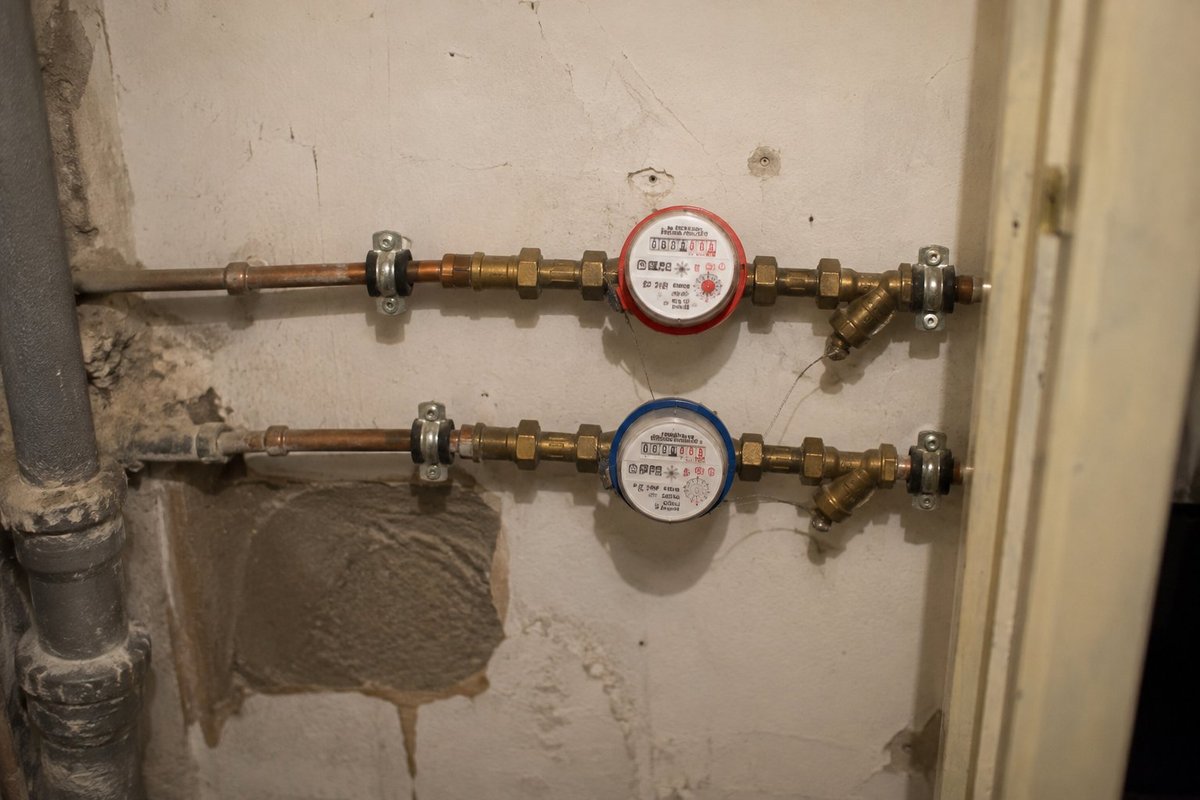
Soviet-era estates. In series-built blocks the assemblies are uniform and the work is predictable. The meters are usually at the riser pipe in the bathroom.
Fragments of pre-war housing. In the older buildings the water supply has often been rebuilt several times. Two apartments in the same building can be completely different, which makes a survey valuable.
Renovated apartments. After a bathroom refit the assembly is often built in behind tiles or hidden by furniture. The inspection hatch is sometimes smaller than it needs to be.
The age of the Pārdaugava pipework. Sediment is more common in the older riser pipes, and it fouls the meter mechanism faster. A filter before the meter is no formality here.
In Iļģuciems the service covers both the series-built blocks and the older housing. Supplying the meter is part of the job.
Apartment owners in the estates. A planned replacement; the work usually goes without surprises.
Residents of older buildings. Often with a specific problem rather than a planned replacement in this neighbourhood.
Property managers. Building-wide work across the apartment stock of Iļģuciems.
You send us a request with the property type and roughly how many meters there are — precision is not required.
We reply and establish the type of building. In Iļģuciems that determines whether we plan standard work or a survey.
We remove the old meter and fit the new one, additionally assessing the condition of the connections in older buildings.
We seal the meter and prepare the documents to submit to your property manager.
In Iļģuciems, where the age of the housing varies, the honest thing is to look at the assembly first and only then talk about price. In an older building a quote given without seeing the property tends not to match what the work reveals.
In the older buildings of Iļģuciems and in renovated apartments the assembly is often hidden. It may be behind a tiled wall with a small hatch, behind a fitted cupboard or in a cluttered recess under the sink.
In most cases that is no obstacle. A problem only arises if the hatch was made smaller than the space needed to take the meter out.
If you know the access is tight, describe it in your request. Then we can come prepared and avoid a situation where the work has to be postponed.
The most common question is how to tell whether a building falls into the “old” or the “new” category. The practical answer is simple: if the apartment is in a standard series-built block with an inspection hatch in the bathroom, it is a standard situation. If the building is pre-war and the meter is somewhere unusual — then it is not.
The second question is why the price can differ in an older building. The reason is not the meter itself, but what surrounds it: limescaled connections, an old valve or a section of pipe that also needs replacing.
The third question is usually about timing. In a series-built block we allow half an hour; in an older building it is fairer to say that the time depends on what the survey reveals.
What sets Iļģuciems apart is that the series-built estates and the pre-war housing are not in separate parts of the neighbourhood but interspersed with one another. In practice that means two neighbouring addresses can require completely different work.
In a series-built block we know what to expect and can state the timing fairly precisely. In a pre-war building the water supply has often been rebuilt two or three times across different decades, and one assembly can contain connections from different periods.
That is exactly why we ask about the type of building in the request. It is not a formality — the answer determines whether we plan standard work or recommend a survey first.
In the older riser pipes of Pārdaugava, sediment and rust particles are more common than in newer housing. They reach the meter mechanism and gradually wear it — the result being that the meter starts to miss low flows considerably sooner than it should.
A filter before the meter is a cheap component that largely prevents this. If your assembly does not have one, it is worth considering during installation — it costs little compared with replacing the meter prematurely.
During the survey we tell you whether it is justified in your case. If the assembly already has one and the filter is working, we will not suggest changing it without reason.
We also serve the neighbouring areas; we tend to plan nearby jobs together.
| Status | Riga neighbourhood |
| City | Riga |
| Location | Pārdaugava / left bank of the Daugava |
We will get in touch within 5 minutes of you submitting the form
Your request has been received. We will contact you as soon as possible.